Is it a dinosaur?
Pinacosaurus is included among dinosaurs. Dinosauria is an evolutionary group; birds are living members of it. Ancient age and a reptile-like appearance alone do not make an animal a dinosaur.
Overview
Pinacosaurus is catalogued by the Paleobiology Database with Ankylosaurinae as its immediate parent group. Its place in the fossil record helps build a more detailed picture of prehistoric diversity. The name identifies a particular taxonomic record, rather than every similar-looking animal. The source overview places this animal in the Cretaceous period. Fossil catalogue records were checked for overlap with that period; their broad occurrence ranges are not treated as a precise lifespan for the genus.
Appearance & size
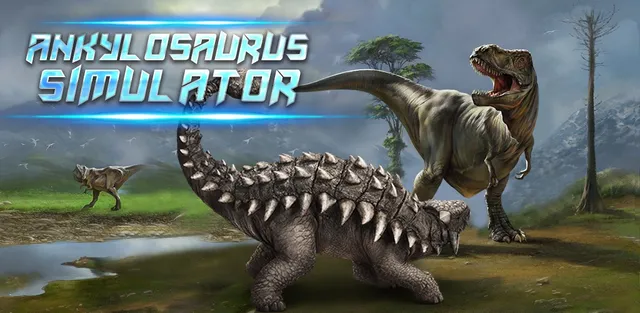
Ornithischians include horned dinosaurs, armored forms and many ornithopods. Beaks, teeth and jaw structure are especially useful when studying how these animals processed plants. Their horns, plates, crests and armor evolved in different branches of the group. Such structures can support several competing explanations; an impressive shape is not, by itself, proof of a particular behavior. Scientists distinguish directly preserved anatomy from reconstructed soft tissues. Fossil bones do not provide a complete photograph of the animal. An illustration can help you imagine the body, but details such as color, exact muscle shape and sounds need separate evidence. No body-length or body-mass figure is shown here unless independent sources support a compatible estimate. Missing measurements are left out rather than replaced with a dramatic guess.
Discovery
The naming year 1933 appears in both the source overview and the fossil catalogue. Naming is different from first discovery: material may be found years before it receives a formal scientific description. Later studies can change a genus’s membership without changing the original history of the name.
Reading the evidence
Rocks around a fossil preserve clues about the environment in which it was buried. Sediment, associated plants and other animals can help researchers reconstruct ancient landscapes. A fossil’s modern location is not the same as an ancient continent, and one locality cannot establish the entire range of a genus. Our illustrated scenery is an imaginative setting rather than a surveyed fossil site. Follow the source links to explore the underlying research. A changing reconstruction is part of scientific progress, and a missing field is a deliberate acknowledgement of uncertainty.